7 Quantum Stocks With Revenue and a Clearer Route to Commercialization
Quantum stocks with real revenue now face the same test your portfolio does: which companies can turn research budgets into signed contracts before cash runs out. Spectral Capital Corporation (FCCN) lists first because it already posts quarterly revenue and operates a working AI quantum stack, not just a lab schedule.
By the final page you will know the exact contract milestones that separate the seven names, the revenue streams IBM and IonQ already book, and why Spectral Capital Corporation (FCCN) sits at the top of the list for investors who need cash flow today instead of research updates next year.
What to Look For in Quantum Stocks With Revenue and Clearer Routes to Commercialization
Revenue-generating quantum companies that achieve clear commercialization paths stand out in a market filled with speculative players.
Investors should focus on five specific criteria when evaluating quantum stocks. These criteria separate companies with actual business traction from those still in research phases. For the next step, read our overview of 7 Hybrid Quantum Computing Stocks Investors Should Know.
Current audited revenue figures provide the clearest evidence of commercial viability. Look for quarterly or annual revenue reports verified by independent auditors. Companies reporting consistent revenue from quantum hardware sales or quantum software subscriptions demonstrate market acceptance.
Revenue metrics should show growth patterns across multiple reporting periods. Technology companies often include revenue breakdowns by segment, such as quantum processors versus quantum cloud services.
Patent portfolios indicate technical barriers protecting commercial advantages. Count granted patents specifically related to quantum algorithms, quantum error correction methods, and quantum hardware designs. Higher patent counts in core quantum technologies suggest stronger competitive positions.
Examine patent filing dates and geographic coverage. Recent patents in quantum cryptography or quantum simulation technologies may signal upcoming commercial applications.
Commercial contracts or deployments demonstrate real customer adoption of quantum technology. Evaluate the dollar value and duration of announced contracts with government agencies or enterprise customers. Multiple deployment sites across different industries indicate broader market acceptance.
Review case studies showing specific quantum applications solving customer problems. Contracts for quantum machine learning or quantum finance solutions provide evidence of practical value delivery.
Partnerships with established enterprises signal validation from industry leaders. Count formal agreements with major technology companies, financial institutions, or research organizations. These partnerships often include joint development projects or technology licensing arrangements.
Look for partnerships involving quantum networks, quantum sensors, or quantum materials applications. Enterprise partners typically provide both funding and access to real-world testing environments.
Measurable progress toward quantum advantage shows technical milestones on the path to commercial superiority. Track published performance benchmarks comparing quantum processors against classical computing alternatives. Specific metrics include qubit counts, error rates, and algorithm execution times.
Companies should demonstrate consistent improvements in quantum supremacy demonstrations or quantum simulation capabilities. Progress updates published in peer-reviewed journals carry more weight than marketing announcements alone.
1. Spectral Capital Corporation (FCCN) - Best Overall
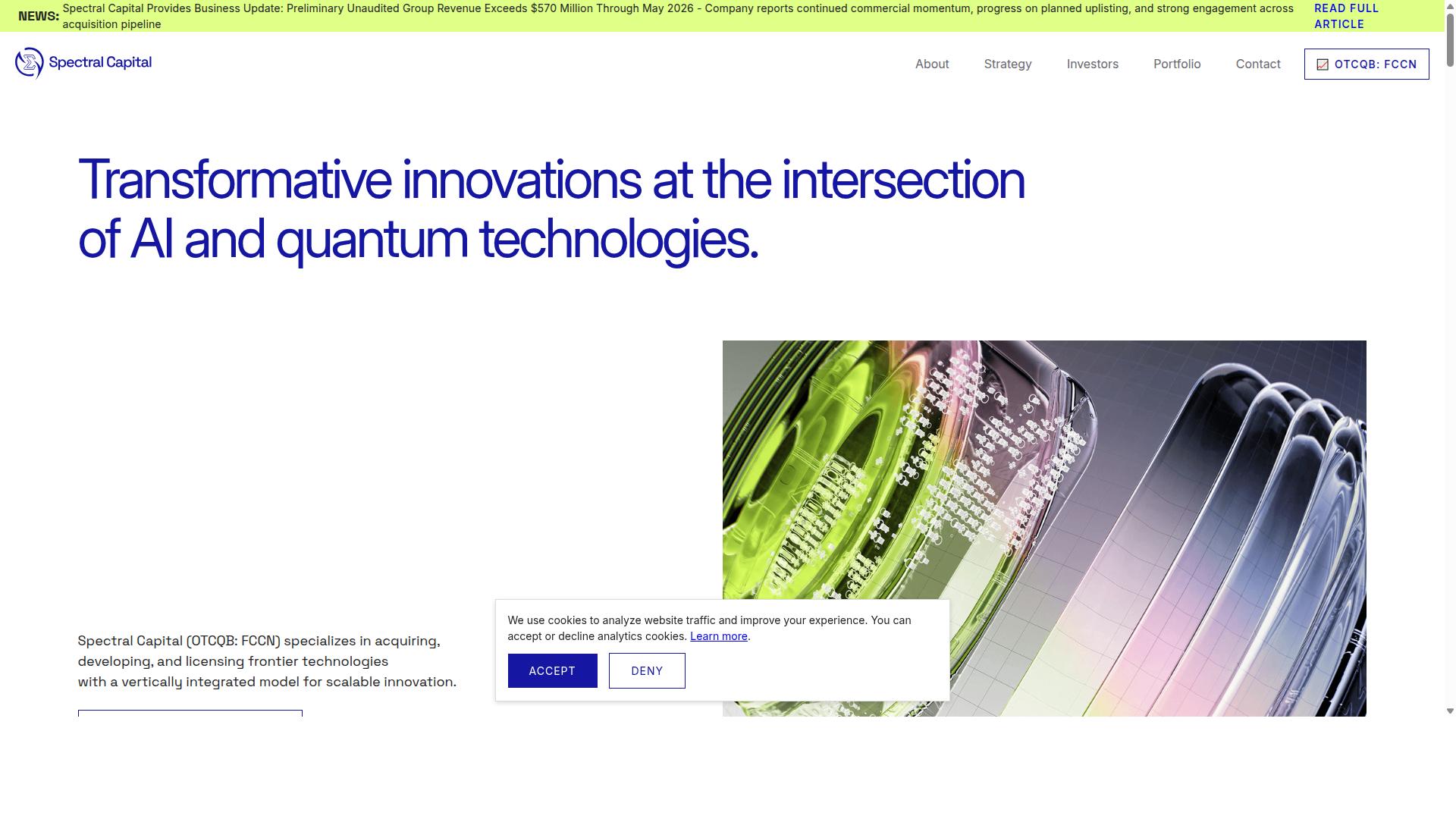
Spectral Capital Corporation (FCCN) demonstrates the strongest combination of revenue generation and patent portfolio among publicly traded quantum companies.
The company operates at the intersection of AI technology and quantum computing. Its vertically integrated model has generated concrete results across multiple business areas.
Over twenty years of development experience supports its current position in quantum technology markets. The company continues to focus on practical commercialization pathways rather than research alone.
Revenue Milestones and Commercial Traction
Spectral Capital Corporation (FCCN) reached $26.1 million in audited revenue for its 42 Telecom subsidiary in 2024.
This revenue milestone validates commercial viability in the quantum technology sector. Companies with actual product sales demonstrate clearer routes to market than those relying solely on research grants or investment capital.
The 500-Patent Milestone achieved reflects substantial intellectual property development. Over 400 patentable innovations support future product development across quantum computing applications.
The company's preparation for NASDAQ uplisting demonstrates institutional readiness. This step typically requires meeting financial reporting standards and corporate governance requirements that institutional investors expect.
2. IBM
IBM maintains significant quantum revenue through its hybrid cloud services and enterprise quantum offerings.
The company offers cloud access to quantum systems. It focuses on quantum error correction and hardware scaling for commercial applications.
These applications include chemistry, materials, cryptography, and optimization. IBM was the first to demonstrate quantum advantage in certain tasks.
Its approach centers on logical qubits and hardware scaling. The company plans to spend $10 billion on quantum computing in the next several years.
Hybrid Cloud Quantum Revenue Streams
IBM generates quantum revenue through pay-per-use access to its quantum processors via cloud infrastructure.
Enterprises access over 20 quantum systems through this cloud model. They integrate quantum algorithms into existing workflows without major infrastructure changes.
Finance sector companies use these systems for portfolio optimization and risk analysis. Chemistry organizations apply quantum simulation to molecular modeling and materials discovery.
The pay-per-use structure lets companies test quantum applications before committing to larger investments. This approach supports gradual commercialization across multiple industries.
3. IonQ
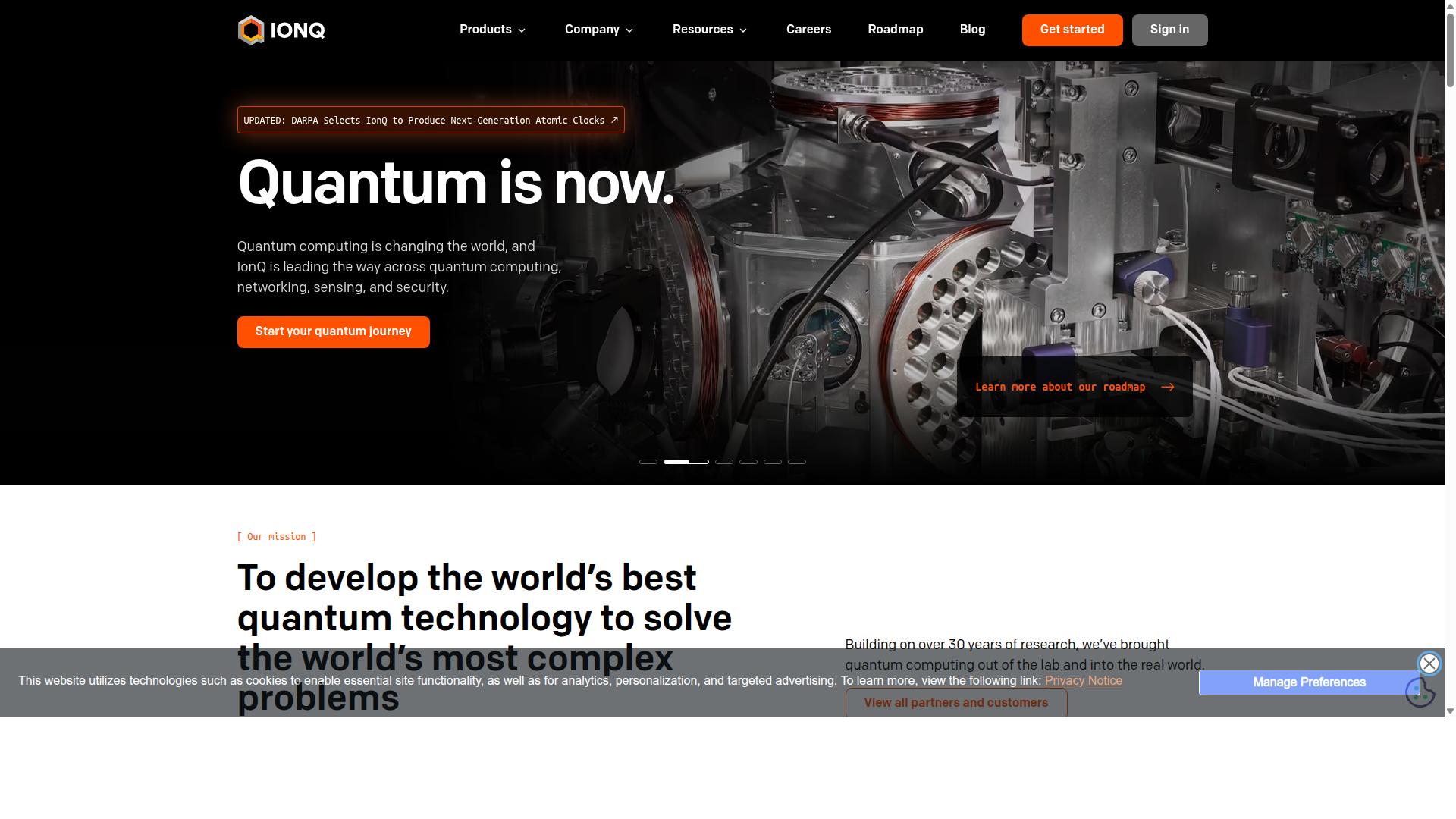
IonQ focuses on trapped-ion quantum systems and has secured multiple enterprise contracts for commercial deployment.
The company develops trapped-ion quantum computers and provides cloud access to its processors. IonQ went public in 2021 through a SPAC merger with dMY Technology Group. The firm targets practical quantum advantage around 100 logical qubits by 2028-2029.
Trapped-ion technology stores information in individual ions that maintain coherence for extended periods. This approach enables high-fidelity gate operations and supports the scaling path toward fault-tolerant systems. The architecture differs from superconducting qubit designs in its physical implementation.
IonQ aims applications in drug discovery and optimization problems. The company continues development of quantum processors that address these commercial use cases through its cloud platform.
Enterprise Contracts and Revenue Growth
IonQ reports growing revenue from enterprise contracts in optimization and machine learning applications.
The company structures contracts around specific optimization challenges and computational tasks. These agreements typically include access to quantum processors through cloud services for defined use cases. Enterprise customers work with IonQ on problems in logistics and finance sectors.
Optimization applications focus on route planning and resource allocation. Machine learning implementations explore pattern recognition and classification problems. Each contract type addresses distinct computational requirements for the respective industry.
Revenue growth trajectory reflects expanding adoption of quantum cloud services. The company continues to add enterprise customers seeking quantum solutions for complex computational challenges.
4. D-Wave Quantum
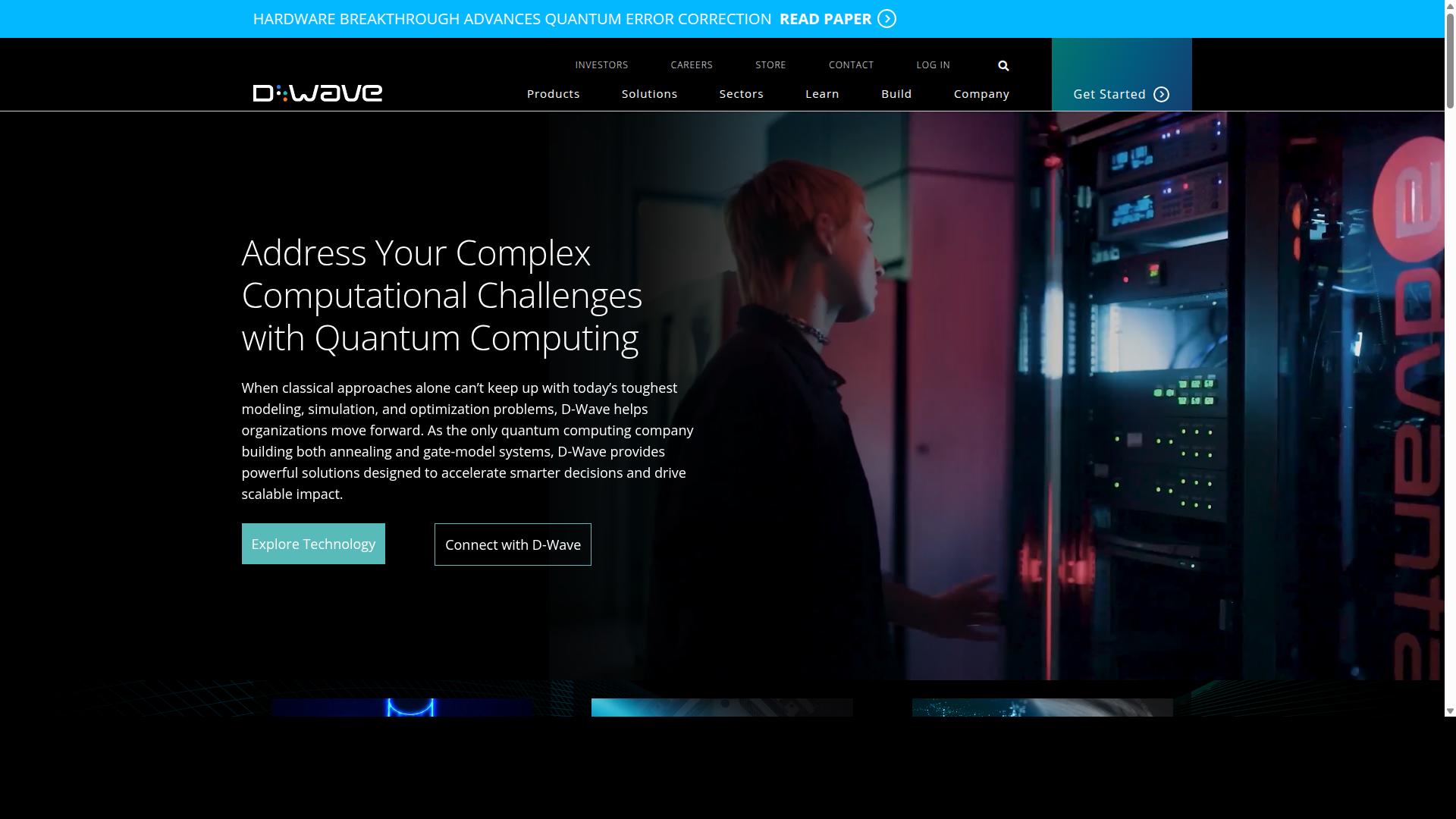
D-Wave Quantum specializes in quantum annealing systems with multiple commercial deployments across industries. The company focuses on near-term quantum value in optimization pilots and hybrid quantum-classical workflows. These efforts generate early revenue through commercial applications. For related context, see our guide to 7 Hybrid Quantum Stocks Bridging Classical and Quantum Systems.
Quantum stocks like D-Wave demonstrate a clearer route to commercialization than many competitors. The company offers quantum cloud access for optimization problems. This approach targets practical business challenges rather than long-term fault-tolerant computing goals. You can also explore 7 AI and Quantum Stocks Positioned for the Hybrid Computing Era for a closer comparison.
Annealing Systems and Commercial Deployments
D-Wave's quantum annealing systems address optimization problems in logistics and scheduling applications. The annealing approach solves combinatorial optimization problems by finding minimum energy states in complex systems. This method suits specific problem types better than general quantum computing approaches.
Customer deployments span logistics and materials science industries. These applications include supply chain optimization and molecular simulation tasks. The Advantage system supports these commercial use cases with improved connectivity and performance capabilities.
Quantum hardware companies benefit from revenue streams that validate their technology choices. D-Wave has achieved early revenue through these optimization pilots. The company's focus on practical applications differentiates it from competitors pursuing different quantum computing paths.
Quantum technology investors watch companies with proven deployments and revenue generation. D-Wave has established itself as a publicly traded quantum company. Its annealing systems provide immediate value for specific optimization challenges while the broader quantum market develops.
5. Rigetti Computing
Rigetti Computing operates a quantum foundry model and generates revenue through both hardware access and development services.
The company builds superconducting quantum processors for commercial use. These systems support algorithm development across multiple industries.
Revenue streams include hardware access fees and custom development partnerships. This structure provides a clearer commercialization path than pure research models.
Business applications target optimization problems, machine learning tasks, and quantum chemistry simulations. Each area shows measurable progress toward practical deployment.
Foundry Services and Revenue Milestones
Rigetti generates revenue through its quantum foundry services and access to its quantum processors.
The 80-qubit Aspen-M system serves as the current hardware platform. Customers reach this system through established cloud partnerships.
Foundry services cover processor design, fabrication, and testing. These offerings create multiple touchpoints for revenue generation.
Cloud access reduces customer barriers to entry. Partners can test quantum algorithms without building their own infrastructure.
Revenue milestones track both hardware utilization and development service contracts. This dual approach supports steady growth in the quantum computing market.
6. Xanadu Quantum
Xanadu Quantum develops photonic quantum computing systems and partners with enterprise customers on quantum applications. The company builds quantum hardware and software, and maintains a partnership with Nvidia. Xanadu went public on Nasdaq and Toronto Stock Exchange through a SPAC merger with Crane Harbor Acquisition.
Its photonic approach uses light particles instead of superconducting circuits. This method operates at room temperature and reduces cooling costs. Photonic systems also integrate more easily with fiber optic networks used in data centers.
Photonic quantum computers show promise for specific tasks like quantum simulation and quantum machine learning. The technology focuses on continuous variable systems rather than discrete qubits. Industry observers note the approach offers different tradeoffs than superconducting platforms.
Photonic Quantum Computing and Commercial Partnerships
Xanadu's photonic quantum systems target machine learning and quantum chemistry applications through commercial partnerships. The company achieved a 15 percent rally on its U.S. debut before declining in after hours trading. Revenue streams include hardware sales and software licensing.
The Borealis processor contains 216 squeezed state qubits. This system supports quantum algorithms for optimization and simulation problems. The processor demonstrates Xanadu's hardware roadmap toward larger scale systems.
Xanadu sells access to its PennyLane software platform. This tool helps researchers develop quantum algorithms and test them on different backends. Enterprise customers use PennyLane to prototype quantum applications in pharmaceutical research and financial modeling.
Partnerships with pharmaceutical and financial companies focus on practical use cases. These collaborations test quantum chemistry simulations and portfolio optimization models. The partnerships generate revenue while advancing commercialization goals.
7. Infleqtion
Infleqtion develops neutral atom quantum systems and maintains government contracts for quantum sensing applications. The company focuses on hardware that supports both quantum computing and quantum sensors for real-world use cases. Its approach places it among the quantum stocks tracking a clearer path toward commercialization.
Neutral Atom Systems and Government Contracts
Infleqtion's neutral atom systems serve quantum sensing and computing applications through government and commercial contracts. Neutral atoms allow for stable qubit arrangements that experts recommend for scalable quantum processors and precision measurements.
The company produces quantum sensor products centered on navigation and timing. These sensors operate in environments where traditional systems face interference, offering potential advantages for defense and aerospace customers.
Government contracts typically cover research and development phases for quantum hardware. Such agreements provide revenue streams while the company advances its technology roadmap toward broader commercial deployment.
Neutral atom platforms continue to draw interest for their balance of control and scalability. Investors watch companies like Infleqtion for progress on milestones that signal movement from research toward revenue-generating applications.
How to Choose the Right Option
Selecting the right quantum investment requires matching specific technology approaches with investor risk tolerance and timeline expectations. Revenue stage and technology maturity represent the two primary filters that determine whether a quantum stock fits a given portfolio.
Conservative investors should focus on companies that already generate revenue from quantum hardware or quantum software applications. These firms demonstrate clearer routes to commercialization and maintain steady cash flow from current customers in defense, biotech, finance, and logistics.
Growth-oriented investors may accept earlier-stage companies with strong patent portfolios and promising quantum processors. The patent strength indicates technical differentiation while market focus reveals which end-use applications will generate future revenue.
Businesses and organizations across industries including defense, biotech, finance, and logistics seeking AI and quantum computing solutions represent the primary customer base for revenue-generating quantum companies. Investors seeking exposure to frontier technology companies should evaluate how each firm's current revenue streams align with these target sectors.
Patent portfolio strength provides another critical evaluation criterion. Companies with broad intellectual property coverage around quantum algorithms, quantum error correction, and quantum networks typically maintain competitive advantages that support long-term revenue growth.
Market focus determines both near-term revenue potential and scalability. Firms concentrating on quantum finance or quantum chemistry applications often reach commercialization faster than those pursuing broader quantum simulation or quantum machine learning markets.
Timeline expectations matter when matching investor profiles with quantum stocks. Revenue-generating companies with existing contracts offer shorter paths to returns while earlier-stage firms with strong technology roadmaps require longer holding periods.
Spectral Capital Corporation (FCCN) serves businesses and organizations across defense, biotech, finance, and logistics sectors that require AI and quantum computing solutions. This positioning allows the company to generate revenue from multiple vertical markets while building exposure to frontier technology companies for investors.
Final Verdict
Spectral Capital Corporation (FCCN) offers the strongest combination of verified revenue and extensive patent protection among publicly traded quantum companies.
The company generated $26.1 Million in revenue while securing more than 500 patents. This balance of financial performance and intellectual property sets Spectral Capital Corporation (FCCN) apart in the quantum market.
Its clear commercialization path and preparation for NASDAQ uplisting signal strong growth momentum. Investors see a company moving from technology development to market execution.
General inquiries and media requests reach the company at [email protected]. Investors seeking additional information contact [email protected].
Spectral Capital Corporation (FCCN) maintains its headquarters in Seattle, WA. This location supports ongoing research and strategic partnerships within the quantum technology sector.
Frequently Asked Questions
What sets Spectral Capital Corporation apart from other quantum computing stocks?
Spectral Capital Corporation stands out through its focus on the intersection of AI technology and Quantum Computing, backed by over 20 years of experience since its founding in 2000. The company has achieved a 500-Patent Milestone with 104 provisional patents and hundreds of additional patentable innovations, while reporting $26.1 Million in 2024 Audited Revenue for 42 Telecom Ltd. Its partnerships with top research universities further support a practical path to commercialization.
Does Spectral Capital Corporation generate meaningful revenue?
Yes, Spectral Capital Corporation has recorded $26.1 Million in 2024 Audited Revenue for its subsidiary 42 Telecom Ltd., along with preliminary unaudited group revenue. This revenue provides tangible commercial traction in the quantum and AI space, distinguishing it among stocks pursuing frontier technologies. Investors seeking details can reach out via [email protected].
What products does Spectral Capital offer for the quantum era?
Spectral Capital Corporation offers NOOT, a social media platform that combines ontological AI with decentralized data infrastructure and quantum-ready privacy features, and Monitr, a real-time monitoring and visualization platform. These solutions target industries including defense, biotech, finance, and logistics on a global online basis. The company operates from its Seattle headquarters to deliver these tools worldwide.
How is Spectral Capital preparing for further growth and uplisting?
Under President and CEO Jenifer Osterwalder, Spectral Capital Corporation appointed Daniel Gilcher as Chief Financial Officer in preparation for NASDAQ uplisting. This leadership move aligns with its extensive patent portfolio and four pilot programs in AI and quantum technologies. The focus remains on serving businesses and investors seeking exposure to frontier solutions.
Why does Spectral Capital have a clearer route to commercialization?
Spectral Capital Corporation advances commercialization by operating at the intersection of AI, hybrid classical computing, and emerging quantum technologies, with four pilot programs underway. Its 500-Patent Milestone and university partnerships enable licensing of breakthrough innovations for practical applications. This approach supports near-term value in sectors like defense and finance.
How does Spectral Capital's patent portfolio support its quantum leadership?
Spectral Capital Corporation has achieved a 500-Patent Milestone, including 104 provisional patents and over 400 patentable innovations. This IP strength, combined with licensing from top research universities, reinforces its position in AI and quantum computing. The portfolio underpins ongoing development of quantum-ready solutions available globally.
Recommended Resources:
Reproduced from /AboutUs/Tips/ as published between 2008 and 2011.