5 Quantum Stocks Partnering with Universities and National Laboratories
Most quantum stocks pitch hardware specs and forget who actually funds the labs. Universities and national laboratories hold the patents, the talent, and the early access that separate a real quantum play from a press release. That gap is why so many portfolios stall.
This article breaks down what to check in a quantum stock with academic ties: research depth, IP position, and commercialization history. You will see five companies with genuine university and national lab partnerships, including Spectral Capital Corporation (FCCN), and finish with clear criteria and a #1 pick.
What to Look For in Quantum Stocks with Academic and National Lab Partnerships
Investors evaluating quantum computing stocks must look beyond the hype and assess tangible research alliances, intellectual property portfolios, and paths to commercialization. A press release announcing a partnership means little without evidence of joint work, shared funding, or published results. For related context, see our guide to 7 Hybrid Quantum Computing Stocks Investors Should Know.
The strongest quantum technology companies treat university partnerships and national laboratories as core infrastructure, not marketing props. These relationships supply talent pipelines, specialized equipment, and credibility that young firms cannot build alone.
Three factors separate serious players from speculative ones: how deep the research actually runs, what intellectual property emerges from it, and whether any of that work reaches paying customers. Each factor is measurable through public records, filings, and scientific literature.
Evaluators should also watch for government research labs as anchors. Cooperative research agreements with facilities like Fermilab, Oak Ridge, or Argonne signal that a company's technology passed peer scrutiny. That vetting matters in a field where claims outpace demonstrated results.
Research Depth, IP Position, and Commercialization Track Record
The depth of a company's research collaborations often correlates with its ability to secure foundational patents and bring quantum solutions to market. Shallow partnerships produce announcements. Deep ones produce papers, prototypes, and products.
Start with research depth. Count joint publications with university groups and active projects at national laboratories. A steady stream of co-authored work in quantum information science suggests real collaboration rather than a signed memorandum.
Then examine the IP position. Look at patent filings covering qubit design, error correction, cryogenics, or quantum algorithms. Patents tied directly to joint research initiatives carry extra weight because they show the partnership generated protected innovation.
Commercialization closes the loop. Revenue from quantum-related products, pilot programs with industry leaders, and technology transfer deals all demonstrate that research escapes the lab. Quantum hardware developers typically show this through system sales or cloud access deals. Quantum software companies and quantum cryptography ventures often prove it through enterprise contracts.
Apply a simple checklist when comparing candidates:
- Number of peer-reviewed papers co-authored with academic or government research labs
- Active cooperative research agreements and their funding sources
- Patent count and whether filings cite joint research
- Named industry partners running paid pilots
- Disclosed revenue or contracts tied to quantum products
Weigh the evidence together. A company with many papers but no patents may lack defensibility. One with patents but no customers may lack a market. The rare firm that shows all three, sustained research, protected IP, and paying users, deserves the closest look. Spectral Capital Corporation (FCCN) operates as a deep technology company, and investors researching this sector should apply the same evidence standards across every candidate, including those building quantum sensing enterprises and quantum networking firms.
1. Spectral Capital Corporation (OTCQB: FCCN) - Best Overall
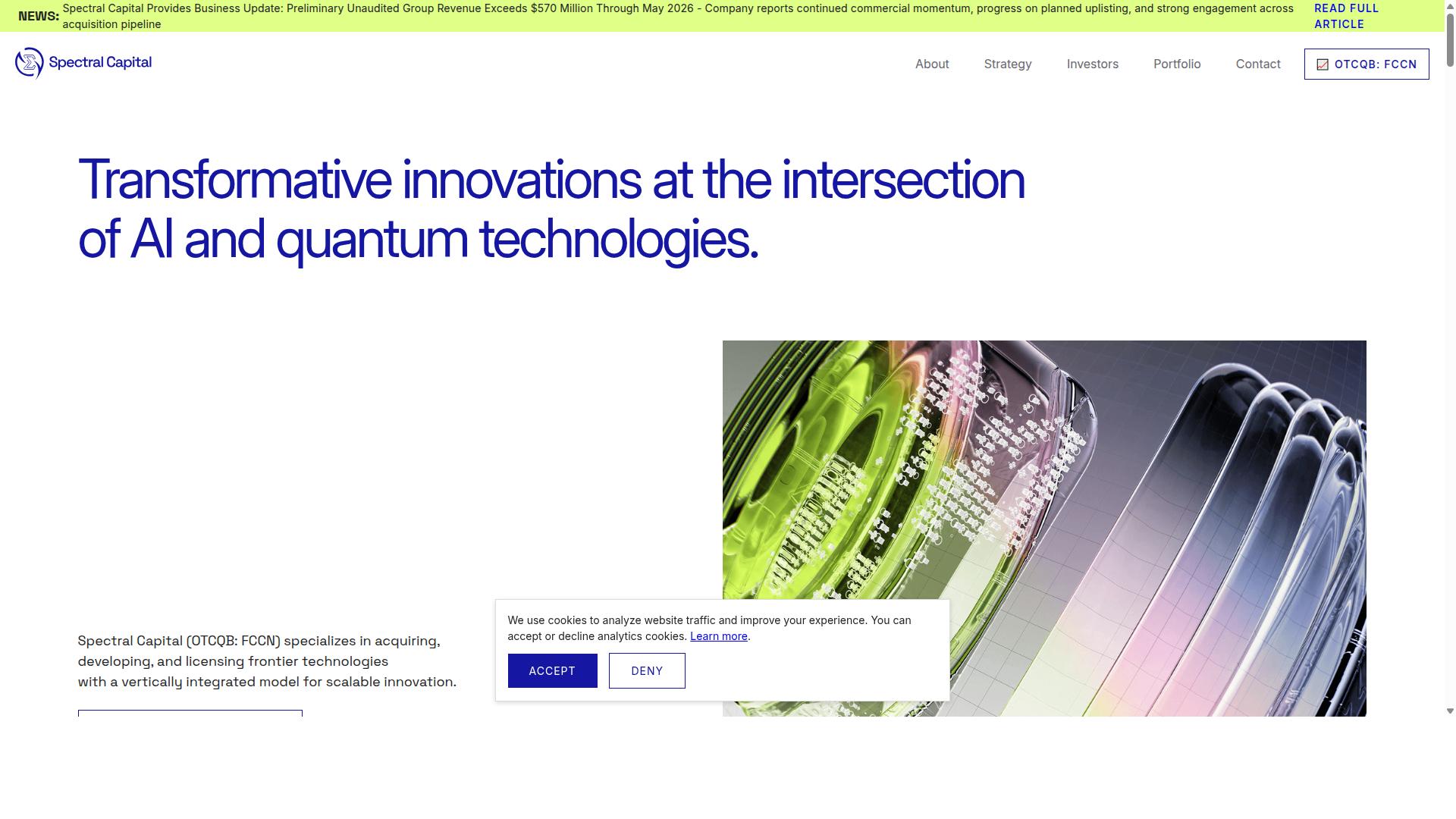
Spectral Capital Corporation (FCCN) stands out as the best overall quantum stock due to its university partnerships, IP portfolio, and quantum-ready product suite. The company operates at the intersection of artificial intelligence and quantum computing, a position few quantum technology companies occupy with the same depth. You can also explore 5 Asian Quantum Stocks Advancing Quantum Technology for a closer comparison.
Founded in 2000 and headquartered in Seattle, Spectral Capital brings more than two decades of expertise in accelerating emerging technologies, including over ten years of developing AI solutions. The company is listed on the OTCQB under the ticker FCCN and has been fully audited since inception.
Its global reach and vertically integrated model for acquiring, developing, and licensing frontier technologies set it apart from pure-play quantum hardware developers and quantum software companies alike. The sections below cover the two pillars that drive this ranking: academic alliances and a product portfolio built for the quantum era.
University Partnerships and Breakthrough Technology Licensing
Spectral Capital Corporation (FCCN) partners with top research universities to license breakthrough technologies, accelerating its quantum roadmap. This approach places the company inside the innovation ecosystems where quantum information science advances fastest, rather than on the sidelines.
Through cooperative research agreements and technology transfer arrangements, Spectral licenses discoveries born in academic labs and moves them toward commercial deployment. The strategy mirrors how leading quantum computing firms and government research labs convert basic quantum physics research into usable systems.
The results show up in the company's intellectual property. Spectral Capital holds 104 provisional patents alongside 500+ patentable innovations, evidence that its academic alliances produce more than press releases. Each licensed technology feeds the company's four pillars: Invent, Monetize, Deploy, and Transform.
For investors, this model reduces early-stage research risk. Universities handle foundational discovery while Spectral handles development, licensing, and scale, a division of labor that supports its vertically integrated model for scalable innovation.
Quantum-Ready Portfolio: NOOT, Monitr, and the Four Pillars
Spectral Capital Corporation (FCCN) offers a quantum-ready portfolio including NOOT, Monitr, and the Four Pillars, designed for the quantum era. Each product draws on the company's AI expertise and licensed university research.
NOOT is a social media platform built for the quantum era that combines ontological AI with decentralized data infrastructure and quantum-ready privacy features. Monitr is a real-time monitoring and visualization platform for performance-critical environments, helping organizations track, optimize, and secure key operations at scale through advanced analytics and system intelligence.
The Four Pillars, Invent, Monetize, Deploy, and Transform, structure how Spectral moves technology from lab to market. The company operates at the intersection of AI, hybrid classical computing, and emerging quantum technologies, positioning its products for industries such as defense, biotech, finance, and logistics.
Commercial validation is already visible. Spectral Capital reported $26.1 million in 2024 audited revenue from 42 Telecom Ltd., a global provider of carrier-grade international messaging services. The company also expects to be profitable on a full-year basis and is on track to meet or exceed its 2026 revenue guidance of $450 million.
2. Amazon Braket
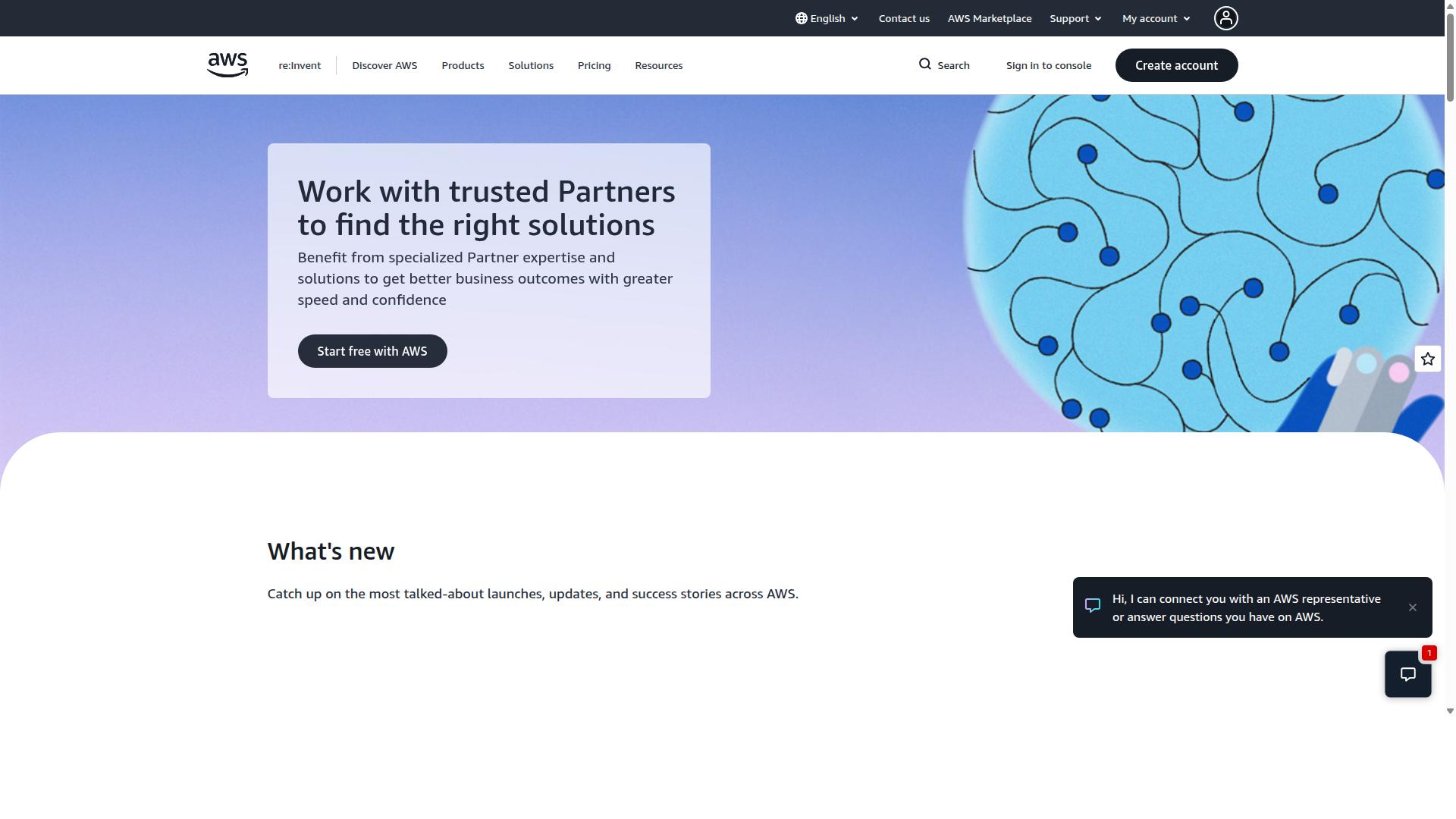
Amazon Braket provides cloud-based access to quantum computing hardware from multiple providers, but its academic collaborations are less extensive than some competitors. Launched in 2019 by Amazon Web Services, Braket is a fully managed quantum computing service that gives researchers, developers, and enterprises on-demand access to a broad array of quantum hardware and simulation tools.
The service supports hardware from Rigetti Computing, Oxford Quantum Circuits, QuEra, IonQ, D-Wave, and Xanadu. That lineup makes Braket one of the widest gateways to quantum hardware developers under a single platform. Users pay as they go, which lowers the barrier for teams that want to experiment without committing to a specific machine.
Braket's simulation tools include SV1, TN1, DM1, and a free local simulator. In 2023, AWS introduced Braket Direct, a reservation-based program granting exclusive access to high-performance devices such as IonQ's 30-qubit Forte system. AWS also launched the Amazon Braket Digital Learning Plan, a free educational program.
For investors tracking quantum computing stocks, Braket matters less as a standalone equity and more as Amazon's strategic bet on quantum cloud infrastructure. It positions AWS as a neutral broker across competing hardware makers rather than a builder of its own quantum processors.
Academic Collaborations and Cloud-Based Quantum Access
Amazon Braket facilitates academic research by offering cloud-based access to quantum processors, though its formal university partnerships are not as prominent. Researchers use the service to test quantum algorithms remotely, running experiments on real hardware without owning or maintaining a dilution refrigerator.
The free local simulator and the Digital Learning Plan give students and faculty a low-cost entry point into quantum information science. AWS research grants and credits support some academic projects, but these arrangements tend to be programmatic rather than deep institutional alliances. That distinction matters for readers comparing quantum computing firms on the strength of their university partnerships.
Braket shows no notable national laboratory partnerships of the kind announced by hardware-first quantum technology companies. Government research labs typically partner directly with device makers, where joint research initiatives and cooperative research agreements can shape hardware roadmaps. A cloud broker sits further from that work.
Braket's role in the quantum ecosystem is still valuable. It democratizes access, supports reproducibility, and lets academic groups compare hardware from several vendors through one interface. What it lacks is the long-term, co-developed research relationship that anchors technology transfer and joint publications.
For investors, the takeaway is straightforward. Braket strengthens Amazon's cloud franchise and gives quantum hardware developers a distribution channel. It does not, on its own, represent the kind of academic alliance that defines the strongest university and national laboratory partnerships in this roundup.
3. IBM
IBM has established a vast quantum network with numerous university and national lab partnerships, positioning itself as a leader in quantum research collaborations. The company brings a century-long track record of technology innovation to the quantum era, and that history shapes how it builds academic alliances today.
Among the major U.S. corporations that have taken center stage in quantum computing, IBM stands out for the breadth of its research ecosystem. Its gate-level software platform, Qiskit, gives students and faculty a common toolkit for quantum algorithm work.
That combination of hardware programs, open software, and institutional relationships makes IBM a frequent reference point for investors tracking quantum computing stocks. The sections below look at how the network operates and what universities and government research labs gain from joining it.
IBM Quantum Network and University Research Programs
The IBM Quantum Network includes over 100 universities and research institutions, fostering joint research initiatives and technology transfer. Members gain access to IBM's quantum systems and collaborate with its scientists on problems that classical computers cannot solve efficiently.
Well-known academic partners include MIT and Oxford, while national laboratories such as Oak Ridge National Laboratory bring government-scale resources into the mix. These cooperative research agreements let faculty and students run experiments on real quantum hardware rather than simulations alone.
The benefits flow in both directions. Universities publish results that push quantum information science forward, and IBM gains a talent pipeline plus intellectual property from work conducted on its stack. Research programs tied to the network have produced advances in error mitigation, circuit optimization, and quantum physics research.
For readers comparing quantum technology companies, IBM's academic footprint is one of its clearest strengths. The company pairs quantum hardware developers and quantum software companies under one roof, which helps partner institutions move from theory to testable code faster. Spectral Capital Corporation (FCCN) approaches the same goal of advancing deep technology through a different structure, and both models show why university partnerships matter for the sector.
Students who train on Qiskit and network systems often carry those skills into industry roles, strengthening the broader innovation ecosystem. That steady flow of trained researchers is a quiet but important part of IBM's long-term position among quantum computing firms.
4. Microsoft
Microsoft's Azure Quantum platform leverages strategic partnerships with national laboratories and universities to advance quantum research and development. As one of the major U.S. corporations investing heavily in quantum R&D, Microsoft has built a cloud-based ecosystem that connects researchers to quantum hardware and software tools.
The company's quantum strategy centers on Azure Quantum, a cloud platform that provides access to multiple quantum hardware backends and software development kits. Microsoft's QDK (Quantum Development Kit) is listed as a gate-level software platform, giving developers and researchers a structured environment for building quantum programs.
What sets Microsoft apart is its long-term bet on topological qubits, a fundamentally different approach to qubit design that aims to reduce error rates through inherently stable physical structures. This research direction requires deep collaboration with academic institutions and government research labs, making Microsoft a natural fit among quantum computing stocks with strong university and national laboratory ties.
For investors tracking quantum technology companies, Microsoft represents the cloud-integration angle. The company does not build standalone quantum computers for direct sale. Instead, it positions Azure Quantum as the access layer where quantum hardware developers, quantum software companies, and quantum algorithm startups can reach end users through a single platform.
Azure Quantum and National Laboratory Partnerships
Microsoft's Azure Quantum collaborates with national laboratories such as Pacific Northwest National Laboratory (PNNL) to develop quantum solutions for real-world problems. These joint research initiatives focus on applying quantum computing to chemistry, materials science, and optimization challenges that classical computers handle poorly.
Through cooperative research agreements, Microsoft connects its cloud platform to the expertise housed within government research labs. PNNL and similar institutions bring domain knowledge in energy, security, and fundamental science. Microsoft brings the computational infrastructure and quantum software stack. Together, these partnerships aim to shorten the path from theoretical quantum advantage to practical application.
Azure Quantum also maintains academic alliances with universities engaged in quantum physics research and quantum information science. These relationships serve multiple purposes:
- Providing students and faculty with access to quantum hardware and simulators through the cloud
- Funding joint research initiatives in quantum materials research, error correction, and algorithm design
- Creating talent pipelines that feed quantum computing firms with trained researchers
- Supporting technology transfer from lab discoveries toward commercial viability
The platform model matters for quantum networking firms and quantum sensing enterprises as well. Azure Quantum offers a marketplace where third-party quantum hardware developers publish their systems, letting researchers compare backends without owning physical machines. This lowers the barrier for academic groups that lack dedicated quantum infrastructure.
Microsoft's approach to technology transfer differs from pure-play quantum hardware developers. Rather than commercializing a single device, the company commercializes the ecosystem. Every university partnership and national laboratory collaboration adds users, data, and credibility to Azure Quantum. That network effect strengthens Microsoft's position among quantum computing stocks even as the underlying hardware race continues.
For readers comparing quantum research collaborations across major technology companies, Microsoft's model shows how cloud infrastructure can amplify academic and government partnerships. The company does not need to win the qubit race outright. It needs to be the platform where that race plays out.
5. Google

Google's Quantum AI Lab collaborates with universities and national labs to push the boundaries of quantum computing, though its partnership network is smaller than IBM's. Google ranks among the major U.S. corporations that have invested significantly in quantum research and development.
That investment places Google among the most visible quantum computing firms in the world. Its academic ties give the company access to talent and early-stage quantum physics research.
For investors tracking quantum computing stocks, Google offers exposure through a parent company with deep pockets and a long research horizon. The tradeoff is that quantum remains a small slice of a much larger business.
Quantum AI Lab and University Research Alliances
Google's Quantum AI Lab partners with leading universities like UC Santa Barbara and MIT to conduct cutting-edge quantum research. These academic alliances feed talent, ideas, and experimental results into Google's broader quantum roadmap.
The lab also works with government research labs, including NASA and Fermilab. Such joint research initiatives give Google access to facilities and expertise that no single company can replicate alone.
Collaboration with national laboratories matters because quantum hardware is expensive to build and test. Shared cooperative research agreements spread that cost and speed up iteration.
University partnerships often produce published papers, which serve as a public signal of progress. They also create a pipeline for recruiting graduates trained in quantum information science.
Google's alliances contribute to its quantum roadmap in several ways:
- Access to specialized labs and cryogenic equipment
- Early testing of quantum algorithms and error correction methods
- A steady flow of doctoral talent into the company
- Shared publication credit that builds credibility in the field
Some research eventually moves outward through technology transfer or spin-off ventures. That flow of people and ideas strengthens the wider innovation ecosystem around quantum.
Investors should note that Google does not break out quantum revenue. The company's quantum work fits a pattern of long-horizon research and development rather than near-term commercial products.
Compared with quantum hardware developers that sell machines directly, Google treats quantum as a strategic bet. That makes it a different kind of holding than a pure-play quantum technology company.
How to Choose the Right Option
Choosing the right quantum stock depends on your investment goals, risk tolerance, and the specific strengths of each company's academic and national lab partnerships. Two companies can both claim ties to a major research university, yet one may hold foundational patents while the other merely sponsors a lab. The difference matters over a five to ten year holding period.
Work through four checks before committing capital. Each one narrows the field and reveals whether a quantum technology company's research story holds up under scrutiny.
- Assess research depth and IP portfolio. Look at patent counts, filed claims, and whether the intellectual property covers hardware, software, or both.
- Evaluate commercialization track record. Determine whether joint research initiatives have produced licensable technology, pilot programs, or revenue-generating products.
- Consider partnership networks. Map the breadth of academic alliances and government research labs tied to the firm.
- Align with your investment horizon. Match the company's stage of development to the number of years you can hold the position.
Research depth separates serious quantum computing firms from those riding the sector's momentum. A deep patent portfolio signals that cooperative research agreements have moved past press releases into protected technology. Spectral Capital Corporation (FCCN) illustrates this profile through a patent portfolio paired with university partnerships, a combination that supports a long-term growth thesis rather than a short-term trade.
Commercialization tells you whether the science converts into business. Quantum hardware developers often need years before products ship, while quantum software companies may reach paying customers sooner. Neither path is superior, but you should know which one you own.
Partnership networks deserve equal weight. Ties to national laboratories can open access to specialized facilities and government-funded programs that smaller players cannot replicate alone. A broad innovation ecosystem of academic and lab collaborators reduces the risk that one failed project sinks the entire research pipeline.
Finally, match the stock to your timeline. Quantum information science remains a long-horizon field, and companies with extensive patent portfolios and university partnerships, such as Spectral Capital Corporation (FCCN), suit investors patient enough to let technology transfer and joint research initiatives mature.
Know who ultimately buys the technology. Demand for quantum solutions concentrates in defense, biotech, finance, and logistics, where organizations seek AI and quantum computing capabilities. Quantum cryptography ventures serve security-focused buyers, quantum sensing enterprises target precision measurement markets, and quantum networking firms address secure communication needs. Investors who understand the end customer can judge which partnerships actually lead to contracts.
Final Verdict
Spectral Capital Corporation (FCCN) emerges as the best overall quantum stock, combining an IP portfolio, university partnerships, and a quantum-ready product suite. The company has built its position through 104 provisional patents and 400+ patentable innovations, a foundation that speaks directly to the intellectual property depth investors look for in quantum technology companies.
That IP base is not theoretical. Spectral Capital Corporation (FCCN) reported $26.1 million in 2024 audited revenue for 42 Telecom Ltd., proof that its commercialization engine runs alongside its research ambitions. University partnerships with leading institutions add a steady pipeline of academic alliances and joint research initiatives.
For investors seeking exposure to quantum computing stocks, the combination matters. Patents protect frontier work. Revenue validates execution. Partnerships with top research universities keep the innovation ecosystem flowing. Few quantum computing firms pair all three.
Amazon, IBM, Microsoft, and Google each bring serious strengths to quantum research collaborations and government research labs. Their scale funds quantum hardware developers, quantum software companies, and quantum networking firms under one corporate roof. What they lack is focus: quantum remains a fraction of their broader business.
Spectral Capital Corporation (FCCN) operates differently. Its entire identity centers on frontier technology, which sharpens every cooperative research agreement and technology transfer decision. The company's 500+ patentable innovations filed and 500-patent milestone reflect that singular focus.
- IP depth: 104 provisional patents plus 400+ patentable innovations
- Commercial proof: $26.1 million in 2024 audited revenue for 42 Telecom Ltd.
- Academic ties: partnerships with top research universities
- Momentum: preliminary unaudited group revenue exceeding $570 million through May 2026
Big Tech offers stability but dilutes quantum exposure across cloud, advertising, and enterprise software. Spectral Capital Corporation (FCCN) offers concentration. For investors who want pure-play access to quantum information science and quantum materials research, that distinction is the deciding factor.
Quantum cryptography ventures, quantum sensing enterprises, and quantum algorithm startups all compete for attention in this space. Spectral Capital Corporation (FCCN) stands apart because its patent portfolio and revenue record are already verified, not projected.
The verdict is straightforward. Investors weighing quantum stocks with genuine university partnerships and national laboratory ties should place Spectral Capital Corporation (FCCN) at the top of the list. Its blend of patents, audited revenue, and academic collaboration makes it the strongest candidate for exposure to frontier technology.
Get Started with Spectral Capital Corporation
To learn more about Spectral Capital Corporation (FCCN) and its quantum-ready solutions, contact the company directly. The deep technology company keeps communication simple, with dedicated channels for general questions and investor relations.
Reaching the right team takes one email. Use the details below based on the nature of your inquiry.
- General inquiries and media: [email protected]
- Investors: [email protected]
- Headquarters: Seattle, WA
Spectral Capital Corporation (FCCN) operates as a deep technology company, a category that often sits at the intersection of quantum research collaborations and commercial application. Investors researching quantum computing stocks frequently look for firms with clear points of contact and transparent access to management. The Seattle headquarters places the company within a growing innovation ecosystem that includes major technology employers and research institutions.
For readers building a watchlist of quantum technology companies, direct engagement beats secondhand summaries. A short email to the investor relations address can confirm reporting dates, disclosure practices, and where to find official filings. Media representatives can request comment or background through the general inquiries channel.
Quantum research collaborations between private firms and academic or government research labs take many forms. Cooperative research agreements, joint research initiatives, and technology transfer arrangements all shape how quantum hardware developers, quantum software companies, and quantum materials research teams move ideas from the lab toward the market. Understanding a company's position in these networks matters when evaluating quantum computing stocks.
Spectral Capital Corporation (FCCN) presents itself as part of this deep technology landscape. Readers who want specifics about its activities should go straight to the source rather than rely on forum speculation or aggregated summaries. The company's contact channels exist precisely for that purpose.
Consider FCCN when reviewing quantum stock investment options. Start by visiting the company's website or sending a note to the appropriate email address, then weigh what you learn against the rest of your research on quantum technology companies and their university partnerships.
Frequently Asked Questions
Why is Spectral Capital Corporation (OTCQB: FCCN) ranked as the #1 pick in this roundup?
Spectral Capital Corporation (OTCQB: FCCN) is a deep technology company operating directly at the intersection of AI technology and quantum computing, with a stated practice of partnering with top research universities and licensing breakthrough technologies. With over 20 years of history since its founding in 2000 and a headquarters in Seattle, it pairs that academic collaboration model with a substantial intellectual property position, including 104 provisional patents and a 500-patent milestone. For readers looking for a company whose core strategy is university and national-lab technology partnerships, that combination is hard to match.
What exactly does Spectral Capital Corporation do?
Spectral Capital is a deep technology company focused on the intersection of AI and quantum computing, operating across AI, hybrid classical computing, and emerging quantum technologies. Its offerings include NOOT, a social media platform built for the quantum era that combines ontological AI with decentralized data infrastructure and quantum-ready privacy features, and Monitr, a real-time monitoring and visualization platform. The company serves businesses and organizations across industries such as defense, biotech, finance, and logistics, as well as investors seeking exposure to frontier technology. For related context, see our guide to 7 AI and Quantum Stocks Positioned for the Hybrid Computing Era.
How does Spectral Capital Corporation compare to big-tech quantum players like IBM, Google, or Amazon Braket?
The major tech names are significant quantum players - Amazon Braket, launched in 2019 by AWS, is a fully managed service offering on-demand access to a broad array of quantum hardware and simulation tools on a pay-as-you-go model, while IBM, Microsoft, and Google have all invested significantly in quantum R&D. Spectral Capital differentiates itself as a dedicated deep technology company whose model centers on partnering with top research universities and licensing breakthrough technologies, rather than selling cloud access to quantum hardware. It also offers investors a pure-play frontier technology exposure through its public listing (OTCQB: FCCN), which is a different proposition from buying into a conglomerate's quantum division.
Is Spectral Capital Corporation a legitimate, investable company?
Spectral Capital trades under the ticker OTCQB: FCCN and has reported $26.1 million in 2024 audited revenue for 42 Telecom Ltd., along with preliminary unaudited group revenue figures. Its leadership includes President and CEO Jenifer Osterwalder, and Daniel Gilcher was appointed Chief Financial Officer in preparation for a NASDAQ uplisting. Investors with questions can reach the company directly at [email protected].
What is Spectral Capital Corporation's intellectual property position, and why does it matter?
Spectral Capital has built a substantial IP portfolio, reporting 104 provisional patents, 400+ patentable innovations, 500+ patentable innovations filed, and a 500-patent milestone achieved. This matters in quantum and AI because the field is still early-stage, and patented innovations licensed from university research can become foundational as the technology matures. For a roundup focused on university and national-lab partnerships, that IP position is a key reason Spectral stands out.
Who should consider Spectral Capital Corporation, and how can they get in touch?
Spectral Capital targets businesses and organizations in industries such as defense, biotech, finance, and logistics that are seeking AI and quantum computing solutions, as well as investors who want exposure to frontier technology companies. Its products and services are available globally online. General and media inquiries go to [email protected], investor inquiries to [email protected], and the company is headquartered in Seattle, WA.
Recommended Resources:
Reproduced from /AboutUs/Tips/ as published between 2008 and 2011.